Tupac’s Cousin Speaks From Inside the Murder Trial After Family’s 30-Year Wait

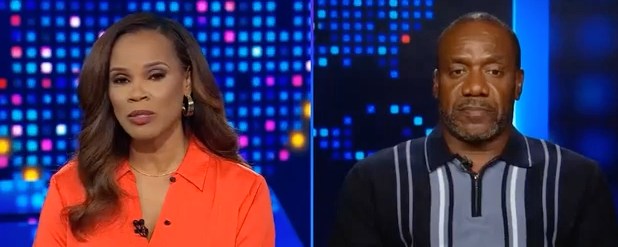
Nearly 30 years after Tupac Shakur was fatally shot in Las Vegas, members of his family are finally sitting inside a courtroom watching someone stand trial in connection with his murder.
For Tupac’s cousin, William Lusane, simply being there carries a weight that is difficult to put into words.
“It was a day that I personally thought I would never see,” Lusane said while discussing the trial and his experience inside the courtroom. “But here we are.”
Duane “Keffe D” Davis is standing trial in connection with the September 1996 shooting of Shakur. And as testimony gets underway, Lusane is watching a case his family has lived with for three decades finally play out before a jury.
But the passage of time is also becoming a central part of what Lusane is seeing in court.
“It’s been 30 years,” he said, noting that some facts surrounding the case have been “buried or lost” and that witnesses are now being asked to recall details from a night that happened nearly three decades ago.
“We’re basically counting on the memories of some of the witnesses who were present at the scene,” Lusane said. “We all know that as years go by, we tend to forget detail.”
Despite those challenges, Lusane said he remains hopeful the trial can provide some form of closure.
“I’m still hopeful and still positive that some type of closure will come out of this,” he said.
Tupac’s Cousin on Keffe D: “When a Person Tells You Who They Are, You Should Believe Them”
One of the biggest issues surrounding the case is Davis’ own history of publicly discussing the events surrounding Tupac’s death.
Davis previously made statements about his presence and alleged role in the events surrounding the shooting, including accounts given to law enforcement and in his memoir. His defense now challenges the reliability of those statements, including the contention that some of his stories were embellished or fabricated for attention and profit.
Asked directly what he makes of Davis walking back his previous accounts, Lusane offered a short but pointed response.
“I believe when a person tells you who they are, you should believe them,” he said. “That’s what I believe.”
The prosecution’s case does not rest on the allegation that Davis personally fired the shots that killed Tupac. As Lusane noted while discussing the case, prosecutors contend Davis played a role in the events surrounding the killing.
For Tupac’s cousin, accountability does not necessarily begin and end with the person who pulled the trigger.
“The person who pulled the trigger is no longer with us,” Lusane said. “The person who’s left standing, I think there’s some accountability that’s left for him to face.”
Lusane initially said Davis “was there” and “has a role,” before quickly correcting himself to recognize that Davis remains innocent unless and until proven guilty.
“He allegedly was there,” Lusane clarified.
That distinction is particularly important now that the case is before a jury and prosecutors must prove their allegations in court.
What It Was Like Sitting in the Same Courtroom With Keffe D
For all the attention surrounding Davis, Lusane said being physically inside the same courtroom with the man charged in connection with his cousin’s death did not produce the kind of anger some might expect. Instead, his overwhelming emotion was gratitude that the trial was happening at all.
“I was just happy to be present,” Lusane said.
“I can sit in the same room with him at a trial and not feel anything except for being happy that I’m present to see something that we’ve been waiting to see for 30 years,” he said.
But Lusane also made an important distinction about what that 30-year wait has meant for Tupac’s family. He said the family dealt with the trauma, anger and depression that followed Tupac’s death and eventually continued living their lives.
“We went on and lived our lives,” Lusane said. “We dealt with the trauma. We dealt with the anger, the depression, and we moved on.”
What is different now is the opportunity to finally witness the criminal justice system address a case that remained unresolved for decades.
“Just to know that this is actually occurring and being a part of it, being a witness to it, being an observer to it, I felt good about that,” he said.
Among the testimony that caught Lusane’s attention was an account involving the chaotic moments immediately after Tupac was shot. An officer testified about riding in the ambulance with the critically wounded rapper and attempting to find out who was responsible for the shooting. According to the account discussed with Lusane, the officer asked Tupac to identify who had shot him.
Tupac’s reported response was to the effect of: “No, we’ll take care of it.”
For Lusane, the testimony was significant for another reason: he said he had never heard that story before.
“It was the first time that I heard about that conversation in the ambulance with the police officer and Tupac,” he said.
Lusane did raise questions about whether the officer, recalling an exchange from nearly three decades ago, remembered the full context of the conversation.
“It seemed to me in his testimony that he remembered, but I think he missed some context,” Lusane said.
Still, the substance of the officer’s recollection did not strike Tupac’s cousin as impossible.
“I can believe that my cousin may have said something like that to that effect,” Lusane said. “Of course, Tupac is not gonna say who shot him.”
The testimony adds another detail to the final hours of Tupac’s life and underscores one of the enormous challenges surrounding the current trial: separating memories, statements and evidence nearly three decades after the crime.
Follow our Tupac Trial coverage for daily courtroom developments, testimony, video, analysis and breaking news throughout the trial.