Women’s History Month Spotlight: Dyana Williams, the Architect of Black Music Month and Cultural Power

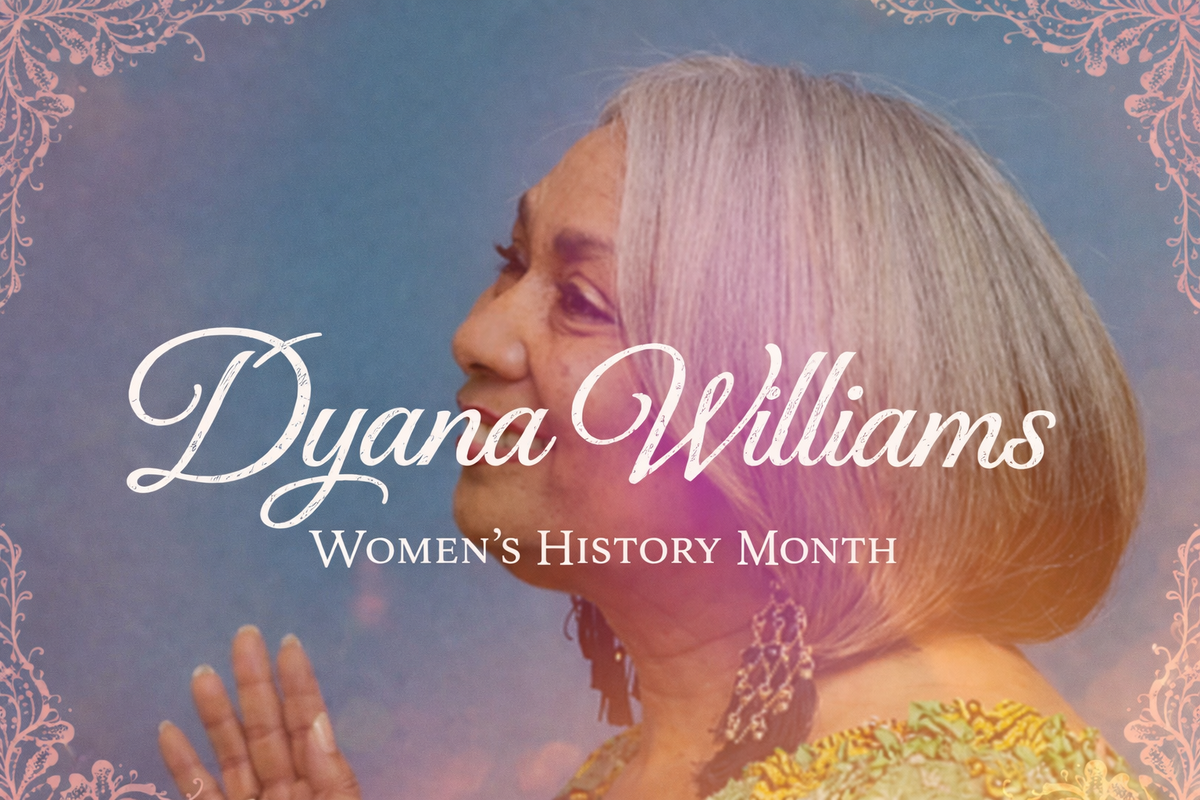
From Vietnam to today’s global conflicts, Dyana Williams reflects on how Marvin Gaye's popular record "What's Going On" still mirrors the world we’re living in, proving that the questions raised through Black music decades ago remain just as urgent, unresolved, and relevant now as they were then.
In a world where trends move fast and culture moves even faster, Dyana Williams has spent decades making sure one thing never gets lost in the shuffle: the origin, impact and power of Black music.
And she’s not just part of the story, she helped write it.
Dyana Williams has been curating culture in real time, on the airwaves, in communities and behind the scenes with artists shaping generations.
“I loved working with and for Black people… I’m a real race woman,” Williams told Shaheem Reid, reflecting a lifelong commitment to supporting Black-owned businesses and uplifting the culture .
Williams’ journey started in Harlem and at City College, where she was surrounded by cultural revolutionaries, poets, activists and early voices of what would become hip-hop.
She built relationships with icons like Gil Scott-Heron and the The Last Poets, both figures she credits as foundational to rap music’s DNA.
“This was the infancy of what we now refer to as hip-hop,” she explains.
Her career took her from Washington, D.C. where she work the midnight shift on the airwaves at WHUR to major radio markets like New York and Philadelphia, where she worked under legendary programmer Frankie Crocker, a radio icon she calls “the voice of New York.”
"I did not realize at that time that I was a lobbyist for black culture and music."
At a time when radio defined culture, Williams helped create a “360 degrees of Black music” experience, blending genres, breaking artists, and setting the tone for what audiences would embrace next .
In 1979, alongside her former husband and one half of the legendary duo Gamble & Huff, Kenny Gamble, along with the Black Music Association, Williams helped establish what we now celebrate every June: Black Music Month.
It started with Jimmy Carter hosting a White House event. But Williams didn’t stop there.
"President Jimmy Carter hosted the first Black Music Month event at the encouragement of the Black Music Association, June 7th, 1979" Williams stated. "About 200 members of the music community, black music community came together in a picnic atmosphere on the South Lawn. I actually had the honor of sitting with Rosalyn Carter, First Lady then and President Jimmy Carter and he declared June Black Music Month that day."
After years of lobbying Congress (in her words, “putting on my most comfortable footwear and knocking on doors”), she secured official legislation, leading to every president since Bill Clinton signing proclamations recognizing the month .
Dyana is also known for her work alongside some of the biggest names in the long history of music. If you’ve heard of them, she’s probably worked with them.
From Rihanna to Justin Bieber, to Chris Brown and Bobby Brown to New Edition (even Menuedo), Williams has spent nearly three decades in artist development and media coaching, earning her a nickname from The New York Times: “The Hip-Hop Whisperer.”
“Black music… is one of America’s greatest creations, artistically and economically,” she says, pointing to its multi-billion-dollar global impact .
Dyana Williams also pointed to "What's Going On" as a timeless reflection of conflict, grounding its relevance in both history and the present day. Reflecting on the year she graduated high school, she recalled, “That year my favorite album… still remains at the top of the list as the number one album of all time… Marvin Gaye’s "What's Goin On" … if you put it on now… it sounds like it could be right now.” She connected the album’s origins in the Vietnam War to today’s global tensions.
“America was embroiled in a horrible war in Vietnam, much like other places where we are engaged in war. We are currently financially supporting a horrible war in Gaza.”
Williams’ deep ties to the music also extend into her personal life, including her close relationship with Teddy Pendergrass, whom she described as her “best male friend” and someone she shared a meaningful bond with over the years. She revealed that she still has original handwritten lyrics from his era, recalling how songs were crafted in real time on yellow legal pads.
“Somewhere in my house I got a bunch of legal pads with original lyrics to these songs,” she said, noting that Kenny Gamble would write them out by hand.
No reflection on Dyana Williams’ journey is complete without Kenny Gamble, her former husband, longtime collaborator and one-half of the legendary duo Gamble & Huff, architects of the iconic “Sound of Philadelphia.” Together, their work helped shape a generation of music, producing timeless records for The O'Jays, The Spinners, The Stylistics, Lou Rawls, Teddy Pendergrass, the Jacksons and countless others whose songs blended love, soul, and sharp social commentary.
Williams pointed to that legacy not just as music, but as message, highlighting tracks like the O’Jays’ socially conscious record "Message And The Music" that confronted systemic inequality and spoke directly to the realities of racism. “There’s a message in the music,” she noted, echoing the ethos behind Gamble & Huff’s catalog, one that didn’t just soundtrack a moment, but pushed it forward.
"The O'Jays did a song like that called "Message And The Music" said Dyana. "So they were about progressive black reconstruction from the destruction of enslavement and racism. Kenny Gamble, to this day, with his universal companies and his current wife, Fatima Gamble, are still fighting. He has charter schools. He provides jobs, education, housing. That's what we need."
For Williams, the enduring power of the music lies in its unanswered question: "what’s going on," a refrain that continues to resonate amid ongoing conflict, including the current war involving Iran, proving that the social consciousness embedded in Black music remains as urgent as ever.
In this Women’s History Month, Dyana Williams’ voice cuts through as both witness and architect, reminding us that while the world keeps asking “what’s going on,” it’s women like her who have long been documenting, shaping and pushing the culture forward anyway.